
10 dishes that sound hard — but are actually great for beginners
There’s that moment when a dish gets mentioned and you automatically take a step back.
“That must be hard.”
“I’m not there yet.”
“That’s for people who actually know how to cook.”
Sound familiar?
Most beginners don’t avoid certain dishes because they’re truly complicated, but because they sound serious. Restaurant experiences, “professional” names, family legends – and suddenly it feels like you’d need permission to try them.
But the reality is much friendlier.
And no, you don’t need a French grandmother.
This list shows 10 dishes most beginners overthink – even though they’re actually perfect entry points into cooking.
Why do these dishes feel intimidating?
Almost always for the same three reasons:
1. Unfamiliar names
If it’s not called fried chicken, it already feels suspicious.
2. Restaurant presentation
Pretty plate, high price, small portion → “there’s no way I can make this at home.”
3. “Classic” status
If lots of people love it, it must be hard to do right… right?
Beginner logic often works like this:
if lots of people order it, it must be complicated.
But most of these dishes take very few steps.
They just have bad PR.
1. Scrambled eggs (yes, seriously)
Why it feels complicated:
Everyone has an opinion. Creamy? Dry? Salt when? Butter or oil?
Suddenly it’s more stressful than an exam.
Reality:
Eggs + heat + attention.
It doesn’t have to be perfect. Scrambled eggs aren’t a beauty contest – they’re breakfast.
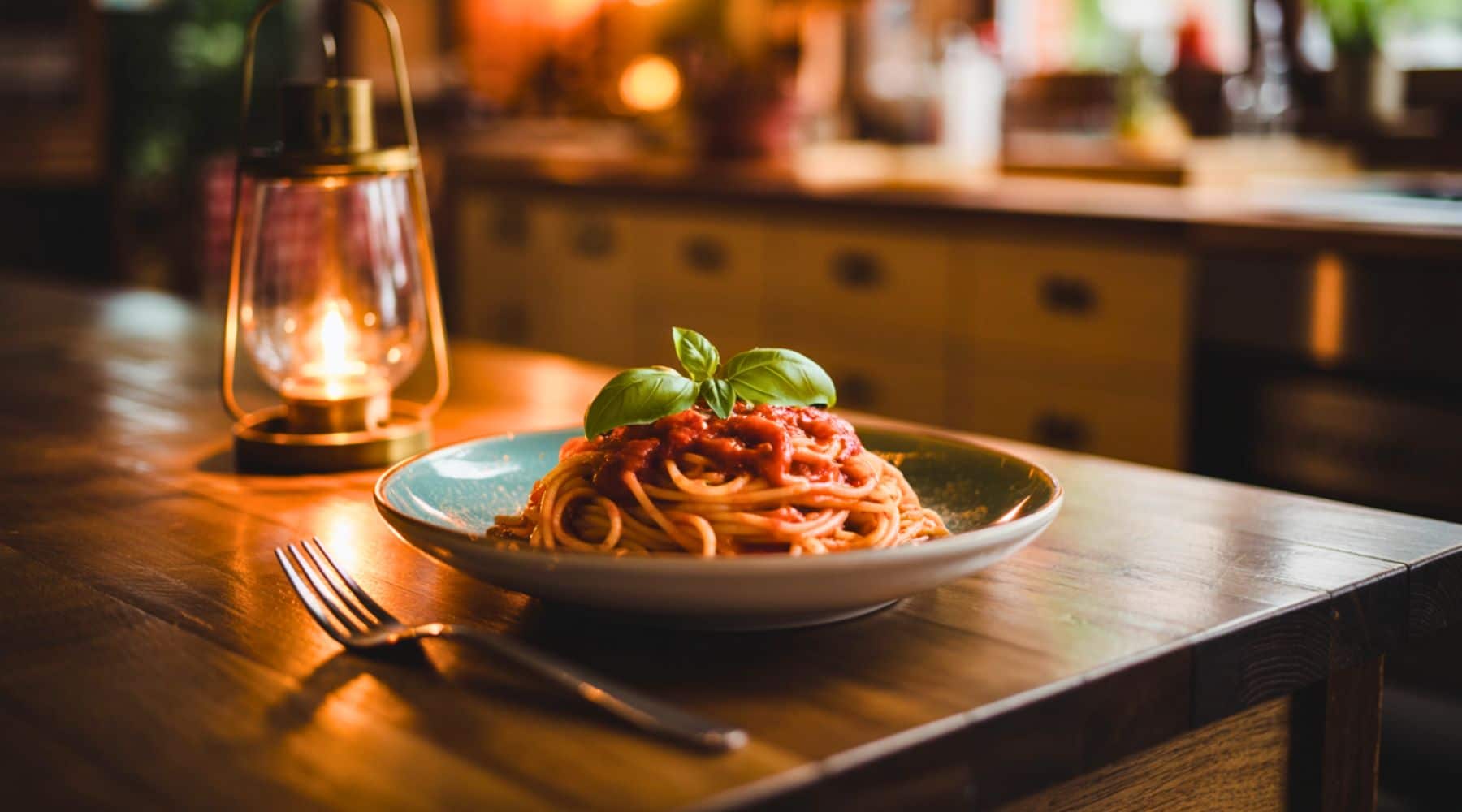
2. Spaghetti with tomato sauce
Why it’s intimidating:
“Because Italians do it better anyway.”
Reality:
A few basic ingredients, one pot, one pan. Tomatoes, onion, garlic, salt.
You won’t get Italian citizenship – but you will get dinner.
3. Chicken breast in a pan
Why it’s scary:
“It’ll be dry.”
Reality:
That’s not a curse. It’s a time-and-heat issue.
Everyone has overcooked chicken once. The difference is that people who cook learn from it.
4. Roasted vegetables
Why we think they’re boring or hard:
Because someone once did them wrong, and we’ve been mad at carrots ever since.
Reality:
Chop + oven + time.
Vegetables aren’t bland out of spite. They just like heat.
5. Pasta with a cream sauce
Why it feels “pro-level”:
It’s creamy, and creamy things feel suspicious.
Reality:
One pan, a few minutes, very few ingredients.
You don’t need a master’s degree in lump-free sauces. If you can stir, you’re on the right track.
6. Risotto (the big scary one)
Why we’re afraid of it:
“Constant stirring.”
Reality:
It needs attention, not complexity.
If you can stir and listen to music at the same time, this dish is for you.
7. Soup (almost any kind)
Why it feels time-consuming:
Because we carry grandma memories of three-hour cooking sessions.
Reality:
Many soups mostly cook themselves.
You don’t have to stand over it. It won’t run away.
8. Omelet
Why it feels “French-level hard”:
Because it sounds French.
Reality:
Eggs + pan + patience.
The first one won’t look good. The second won’t either. That’s completely fine.
9. Pan-fried fish
Why it’s intimidating:
“It’ll fall apart.”
Reality:
If you leave it alone, it works.
Fish isn’t your enemy. It just doesn’t like being poked.
10. Pancakes
Why it’s stressful:
Because the first one is always bad.
Reality:
The first one is always bad.
That’s not a mistake – it’s tradition. The second is edible, the third disappears.
What this list is really teaching you
Not that “these are easy recipes.”
But that the dishes aren’t complicated – the idea of them is.
Most “hard” dishes actually:
– have very few steps,
– need very few tools,
– but do require attention.
And that’s the good news.
Because attention can be learned.
What’s missing isn’t skill – it’s permission
Most beginners set the bar too high.
As if these dishes were reserved for pros.
They’re not.
They’re meant for learning.
For mistakes. For repetition. For laughing.
Which dish have you been afraid of for no real reason?
Pick one.
Cook it imperfectly.
And notice how much less scary it was than you thought.
Leave feedback.
Explore more:
How should a beginner actually learn to cook?
The simple question that doesn’t have a single right answer “Where should I start?” This is one of the most common questions people…
5 moments when you’re sure you messed it up – even though you didn’t
There’s a question almost every beginner asks while cooking.Not out loud. More quietly – one eye on the pan, one hand gripping the…
Why isn’t it browning? What’s really happening in the pan
The pan isn’t working against you – even if it feels personal (and it hasn’t sworn an oath to destroy your confidence today)…
Do you really need an expensive pan?
The “it must be the pan” thought The food sticks. It burns. It doesn’t look like the picture.If you’ve just started cooking, chances…