
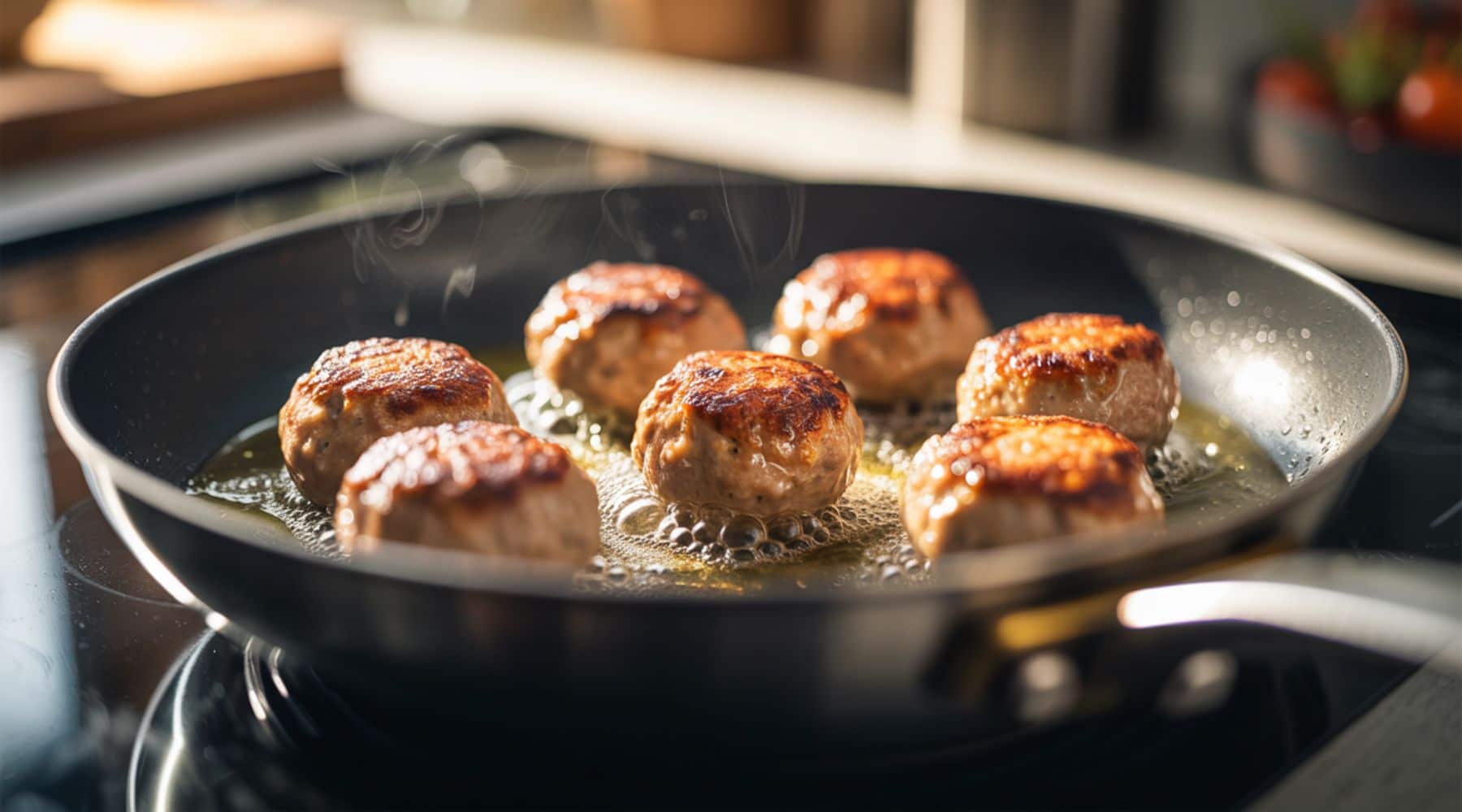
Why isn’t it browning? What’s really happening in the pan
The pan isn’t working against you – even if it feels personal
(and it hasn’t sworn an oath to destroy your confidence today)
There’s that moment when cooking suddenly stalls.
The meat or vegetables are sitting in the pan.
You’re waiting for the magic.
But the magic doesn’t show up.
There’s no nice brown color.
No confident sizzling.
Just a quiet hiss…
and more and more liquid.
And that’s when the inner narrator kicks in:
“I’ve already messed this up.”
“I’m probably just bad at this.”
“Why does this always work for everyone else?”
(Bonus thought: “My mom could do this with her eyes closed.”)
If you’ve made it this far, I’ve got good news:
this isn’t clumsiness.
This is the most common beginner learning moment.
The pan isn’t working against you.
It’s not offended.
It’s not being passive-aggressive.
It’s simply reacting to what it’s given.
What you expect – and what’s actually happening
In a beginner’s head, cooking often looks like this:
put it in → it browns → done
Reality looks more like this:
put it in → something happens → panic → questions → learning
Browning depends on conditions.
If those conditions aren’t there, you don’t get browning – you get steaming.
That’s not failure.
That’s physics.
The pan doesn’t decide.
The conditions do.
Reason #1: The pan wasn’t hot enough
(or you overheated it earlier and then got scared of it)
Classic beginner move:
oil → ingredient → immediately.
Because why wait?
Time is relative, and dinner is hungry.
But if the surface isn’t hot enough yet, the food releases moisture.
That moisture turns into steam.
And steam… doesn’t brown.
Steam = steaming
Steaming ≠ browning
What to do differently:
- Heat the empty pan first.
- Add the oil after that.
- Put the food in when:
- the oil looks glossy,
- it’s not smoking,
- but it looks like it’s “working.”
This is the point you can’t measure.
It won’t be written in the recipe.
👉 This is the kind of knowledge everyone learns by messing it up once.
Reason #2: Too Much Went In at Once
Beginner logic (totally understandable):
– “It’s faster this way.”
– “It’s simpler.”
– “It’s all going to shrink anyway.”
Meanwhile, the pan is thinking:
“Great. Let’s open our own steam room.”
When the pan is overcrowded, the ingredients steam each other.
Heat isn’t browning – it’s fighting water.
So there’s no browning.
Just cooking.
And a mild “why are you doing this to me?” feeling.
What helps:
– Two batches instead of one huge one.
– Leave space between pieces.
– If they’re stacked on top of each other → you already know the answer.
👉 Browning needs space.
It doesn’t work in an open office.
Reason #3: The Ingredient Was Too Cold
This is the part almost no one tells you.
If meat or fish goes straight from the fridge into the pan:
– it cools the pan down,
– releases moisture,
– and once again… steam.
Simple fix:
• Meat, fish: 15–20 minutes on the counter before cooking.
• You’re not warming it up.
• You’re just not starting ice-cold.
This isn’t a “chef trick.”
It’s a basic condition.
Why does this freak you out so much?
Because browning is visual proof.
Brown = “I’m on the right track.”
No brown = “something’s wrong with me.”
As a beginner, you don’t have an internal reference yet.
So when that signal is missing, panic kicks in.
And panic usually leads to:
– cranking the heat,
– stirring like your life depends on it,
– and apologizing to the food.
(The last one is understandable, but sadly ineffective.)
What not to do in that moment
As tempting as it is:
❌ don’t turn the heat all the way up
❌ don’t start stirring wildly
❌ don’t say out loud, “Okay, I ruined this”
These don’t speed things up.
They just make the process unpredictable.
What to do instead – 3 rescue moves
1. Wait
The water evaporates.
The sound changes. That’s an important signal.
2. Give it space
If needed, take half of it out.
This isn’t defeat.
It’s a strategic retreat.
3. Watch, don’t rush
Color.
Sound.
Smell.
👉 This is learning.
When it’s not a problem if it’s not browning
This matters:
not every dish needs to brown.
There are phases where steaming is the goal:
– sweating onions,
– vegetable bases,
– the start of soups and sauces.
In those moments, the lack of browning isn’t the issue.
The issue is not knowing why something is happening.
The Better Question
The right question isn’t:
“Did I mess this up?”
It’s:
“What’s preventing browning right now?”
The pan is consistent.
Physics is predictable.
And learning starts exactly where panic used to be.
And if it doesn’t brown next time either?
That’s okay.
It’s not working against you.
It’s teaching you.
Leave feedback.
Explore more:
Beginner-friendly recipes aren’t always what they seem
When “beginner-friendly” is misleading You’ve probably been there. You searched for a beginner-friendly recipe because you wanted to finally learn how to cook.…
Timing in the kitchen: why cooking times don’t work as rules
Why “cook for X minutes” doesn’t work “I cooked it for exactly 8 minutes, and it still wasn’t right.” This is one of…
Heat control for beginners: why “medium heat” keeps burning food
Why does everything burn when you cook on “medium heat”? “Medium heat” might be the most misleading phrase in recipes.A fair question is:…
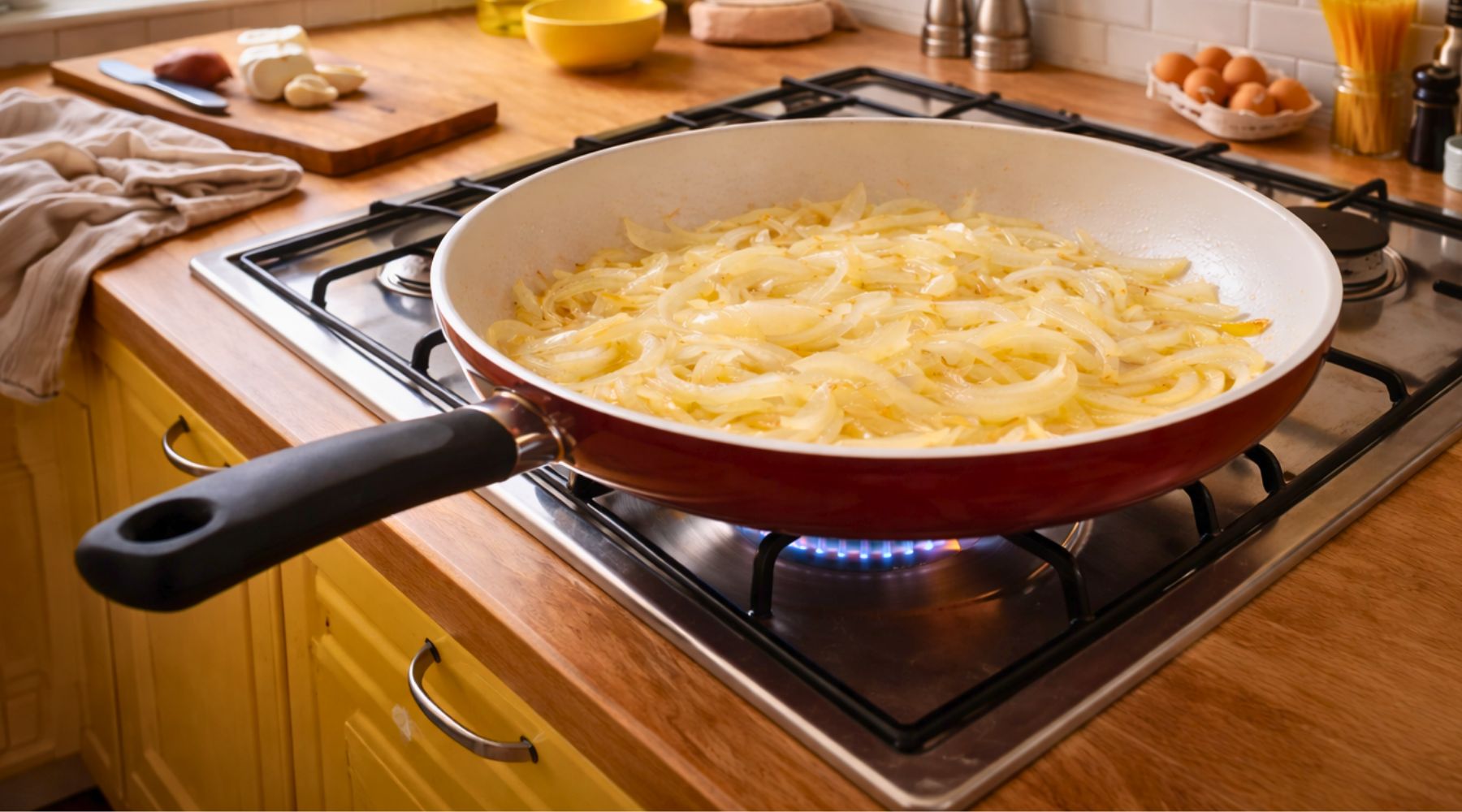
“Cook until translucent”: what recipes mean and why it matters
What every recipe says, but no one explains “Cook the onion until translucent.” If you haven’t cooked much, that sentence doesn’t help –…