
Your first kitchen: what you actually need in the first 30 days
What to get in the first 30 days – and what not to
The overwhelming moment of your first kitchen
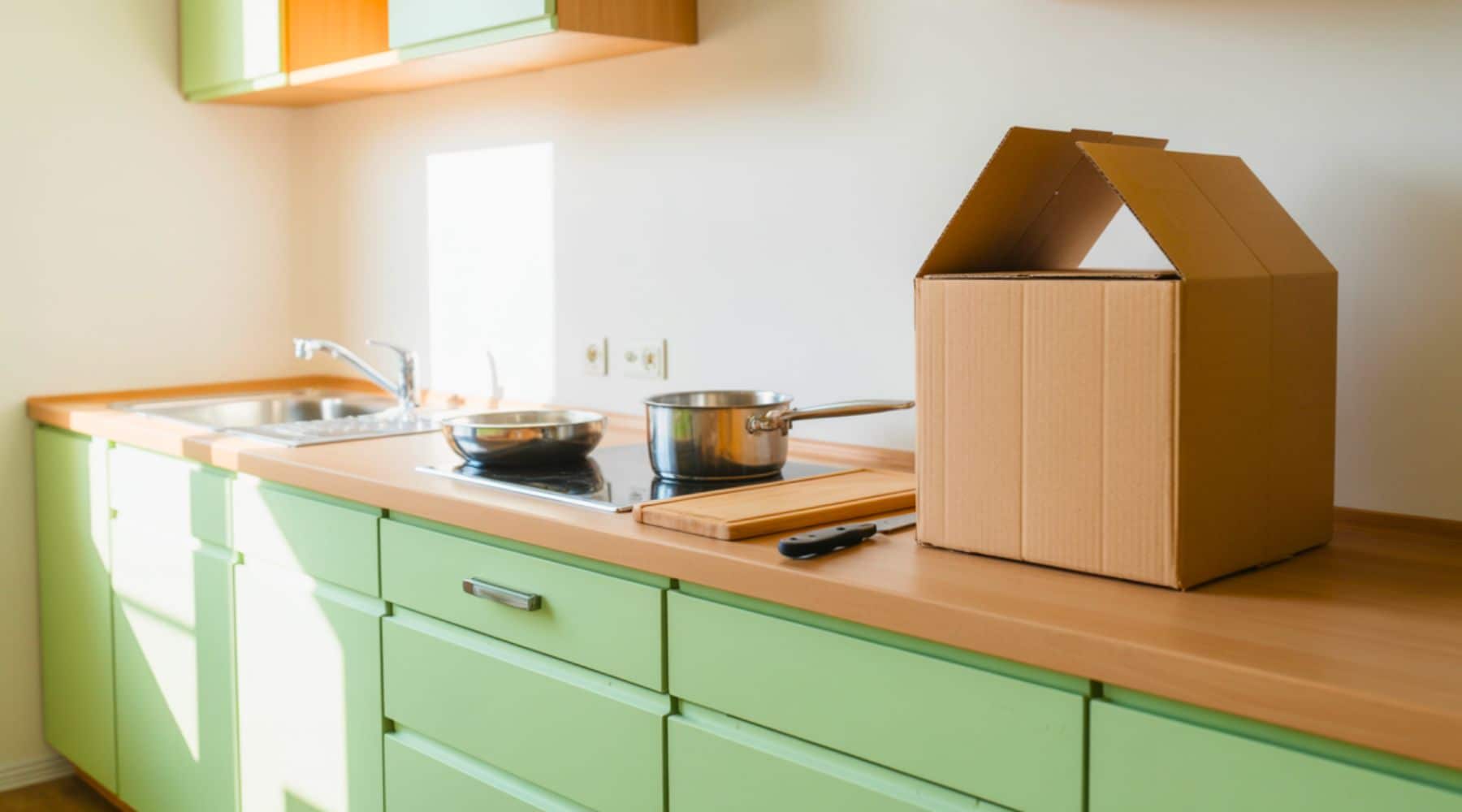
One of the strangest moments in your first place is standing in the kitchen.
You’re standing in an empty space: there are cabinets, a stove, maybe a fridge – and nothing else.
Meanwhile, your phone is open to ten different “kitchen essentials” lists, each one longer than the last.
And the tension kicks in:
“If I don’t buy everything, I won’t be able to cook at all.”
That feeling makes sense. Your first kitchen promises freedom and creates uncertainty at the same time. But the real question isn’t what you absolutely have to buy – it’s what you actually need in the first 30 days, and what can wait.
This isn’t a shopping list.
It’s a priority guide to help you build your kitchen in a way that lets you start cooking right away.
Why buying everything upfront is a bad idea
A lot of beginners make the same mistake: blindly following a “kitchen essentials for beginners” list. They shop, check things off, organize – and then barely cook for weeks.
What usually happens:
– too many tools end up in the kitchen,
– too many decisions need to be made,
– shopping and organizing take center stage instead of cooking.
But a kitchen isn’t finished in advance.
It takes shape through use.
You can’t know what you’ll need until you start cooking. That’s why the “get everything at once” strategy often blocks the very thing you started all this for.
The logic of the first 30 days
Learning, not settling in
The first 30 days aren’t an arbitrary time frame.
It usually takes about that long for:
• your cooking habits to start forming,
• patterns to show up in what you cook again and again,
• you to notice where the process gets stuck.
This period isn’t about setting things up perfectly. It’s about cooking, paying attention, and gaining experience. You don’t need to take notes or build systems. You just need to notice:
– what was missing,
– what was unnecessary,
– what worked well.
That’s why we’re not thinking in long lists – we’re thinking in phases.
What’s worth getting in the first 30 days
For functionality
Basic tools that are hard to cook without
You need surprisingly little in the first month.
Not brands. Not design. Function.
– 1 pan – for frying and sautéing
– 1 pot – for boiling, pasta, and soup
– a cutting board
– one good knife (not a set, just one)
– one stirring tool (a wooden spoon or spatula)
That’s already enough to cook real food at home.
Not “beginner versions,” but actual meals.
The “invisible” basics
A lot of lists forget these, even though missing them is more frustrating than missing a gadget:
– salt, pepper and some basic spices
– some kind of fat (oil or butter)
– dish soap
– kitchen towels
Without these, cooking gets harder much faster than with a missing tool.
What you almost certainly don’t need at the beginning
As a beginner, a lot of tools look tempting.
But in the first 30 days, they usually do more harm than good.
For example:
– specialized tools (spiralizers, choppers, special baking pans),
– complete sets (“everything you need for a kitchen”),
– trendy items you’ll rarely use.
They’re a problem because they pull your attention away from cooking. They create the feeling that you’re still not “ready,” that something is missing.
It’s important to say this out loud:
you’re not behind because you don’t have them.
How to decide what you actually need
This is one of the most important skills you can learn in your first kitchen: making decisions for yourself.
Pay attention to:
– what you cook again and again,
– where the process gets stuck,
– what you keep looking for in the cabinets.
Before you buy anything, ask yourself:
– What would I actually use this for?
– What happens if I don’t have it?
– Could I replace it with something else?
If not having a tool regularly stops you from cooking, it makes sense to get it.
If it would just be “nice to have,” it can wait.
Small kitchen, rented place, compromises
Your first apartment’s kitchen is rarely ideal.
It’s small, rented, not permanent – and that’s okay.
You don’t need to think in final solutions. Temporary, portable tools, simple storage, and minimal equipment are more than enough for a beginner kitchen.
Function always matters more than a uniform look.
Your first kitchen isn’t a showroom – it’s a place to learn.
The biggest mistake
Replacing practice with shopping
Tools promise safety.
Cooking brings uncertainty. That’s why it’s so tempting to buy one more thing instead of actually cooking.
But what would happen if you:
• used fewer tools,
• cooked simpler dishes,
• paid more attention?
Progress doesn’t come from the store.
It comes from using what you already have.
Your first kitchen isn’t finished, it’s forming
The first 30 days aren’t about stocking up.
They’re about experience. Trial. Starting to cook – even in imperfect conditions.
A good kitchen isn’t good because of what’s in it.
It’s good because of what you do in it.
To close, ask yourself this:
What’s the one thing you could cook today with what you already have?
If you can answer that, you’ve already started.
And if you’d like, in the related articles we’ll go deeper into beginner kitchen tools, the pan question, and core cooking skills.
Leave feedback.
Explore more:
What makes a kitchen usable
Not pretty. Not trendy. Just functional. The Pinterest kitchen as a bad benchmark “My kitchen isn’t like this. No wonder cooking doesn’t work…
Why “perfect” kitchen organization doesn’t work for beginners
Kitchen organization for beginners: why “perfect systems” don’t work When the “good system” lasts three days Does this sound familiar? One Sunday afternoon,…
Is cooking a basic life skill – or just a hobby now?
Cooking isn’t a hobby – it’s basic literacy. Or is it? The statement that divides people “Cooking is basic literacy.” For a lot…

7 kitchen tips that sound helpful – but make cooking harder for beginners
There’s a point where cooking doesn’t stop working because you’re not paying attention –but because you’re trying to follow too many “good tips”…